Monday, 7 January 2013

Evaluation


Evaluation – Matt Smith
Exploring Photographic Practice

I’ve found this module very interesting and I have really enjoyed doing it. It was nice to research a new photographer and although challenging at first I’ve now got a good idea of what Rinko Kawauchi’s work is about and I actually really like her photographs. I will definitely be keeping up with her work in the future.

On the technical side of things I’m happy with what I’ve achieved. My ideas were vague at first and although I was excited to try photographing shadows it didn’t really motivate me to get out and shoot. Once I chose a subject much closer to my personal interests I was much happier and really enjoyed my shoots and editing the images.

The presentation side of this project was a challenge for me as I’m not totally confident in front of a room of people but once the first presentation was complete I found the second was much easier as I could talk about my own ideas and my personal opinion rather than remembering facts about a person and there bodies of work.

I also found it useful to talk to the group about my ideas as I got a different perspective, which helped me broaden my thoughts and appreciate how people would interpret my initial thoughts. Once I had a solid idea I had a lot of fun shooting as I was trying an approach that’s alien to me. I often use wide angle lenses and don’t really go much past 50mm unless absolutely necessary but for this project I found myself getting really close to objects using a long focal length as this is what Kawauchi does in her photographs. It was also a challenge to shoot for an end result, which was a square photo when my camera sensor is rectangular. This meant I had to imagine the edges of my frame didn’t really exist so that my composition was spot on and then the photos were cropped in post. I feel this was successful as I managed to get everything I wanted in frame without compromising with cropping elements out.

When editing my photos I tried to keep it simple knowing Kawauchi shoots on film so there is little room for editing in her shots I wanted to keep it the same with my shots. No cloning elements out, no sharpening and no burning/dodging. I just used a curves adjustment layer to make the photos feel more like they were out of film camera, which meant increasing the blues and greens and adding a slight purple tinge to the shots. In some of the shots I added a white vignette with low opacity, as Kawauchis shots are often hazy around the edges. I couldn’t have used a black vignette as I felt this was too dark as her images are full of colour and bright.

Overall I’m very happy with this project and it’s been my favourite so far as there was a lot of room for experimentation with my photographer and it was a bonus that I ended up really liking her work. 

Sunday, 6 January 2013

Final Images


These are my final images emulating the work of Rinko Kawauchi. I have cropped them to a square frame and tweaked with the colours using Photoshop CS6. I think they have turned out well and I'm very happy with them.


I'm happy that I managed to have some continuity between the shots rather than than 6 random snaps. I've tried to take Kawauchi's style without just ripping off her photos. I've tried to make links between her subject matter and mine by focusing on deforestation which shares similar themes to her work. She often focuses on the links between the natural world and the humans in it.

I think some of my images could have been more reflective of Kawauchis work but I found it difficult to put my own spin on things but still have similar styles to her because her work is so open ended it was hard to focus on a subject without people thinking they are just random snaps. I'm happy that I chose to focus on this deforestation rather than shadows as I have seen similar projects about shadows and I shared a personal interest in my final subject which led to me spending a lot more time on my shots.

Sunday, 30 December 2012

Nunsmere Visit

Today I returned to Nunsmere where they have started the deforestation of a vast amount of land. It was a sunday so luckily there was no workmen around just dog walkers. I spent a good few hours walking around the huge site and couldn't resist getting a panorama of a section of it mostly for my own records of how the place has changed over the years.

I'm still sorting through the images to see which ones would suite this emulation project and I'll be posting the results shortly after editing them down and putting a few final touches onto them.


Saturday, 22 December 2012

A New Direction

After initially wanting to do my project about shadows and the way the form I have decided to go in a different direction after stumbling on a new location which I think will give interesting results.

While on a countryside walk I stumbled on a patch of land where deforestation was mid-swing. I was quite shocked as I'd been going to this location for years and upon returning there was a vast patch where the trees had been cut down and logs stacked metres in height. 

I thought this was be a better subject to photograph as it's personal to me while containing similar links to some of Kawauchis work. I think it's quite fascinating how she looks at the circle of life for both nature and humans and it begs the question would they increase or decrease if the other didn't exist.

I'll be returning to this location armed with my camera and I will hopefully have a final series of photos that emulate the work of Kawauchi.

Friday, 14 December 2012

Initial Ideas


My initial thoughts for my emulation project are pretty vague. I've been out experimenting with other projects and on my travels I snapped this shot. I was drawn to it by the shadow and this got me thinking about Kawauchis work with light. What if I focused on when light met the dark eg. shadows.

I did a quick edit in photoshop on this image tweaking the curves to get it feeling like film and then finishing it off with a square crop and I'm happy with the shot I think the composition could have been slightly better maybe putting the shadow in the top 1/3 of the frame instead of half way down.

The only problem with this subject is that it's out of my control, I'm relying on sunlight which isn't always fantastic in british weather so it will be a case of trial and error to go out and shoot when the conditions are right and see what I can return with.

Wednesday, 5 December 2012

Emulation

After investigating Rinko Kawauchis work and focusing on her book 'Illuminance' I feel I've got a good enough understanding of her techniques and motives to attempt to emulate her work. 

To summarise:
She shoots on a 6x6 camera giving her a square image which I will have to adopt to get the same composition as her. Although I'm shooting on a DSLR which has a landscape sensor (not square like a 6x6) I will have to crop my images in post production. This will be challenging as I will have to compose my shots through my viewfinder while ignoring everything that's not within a square crop of the frame.

Her photos are always involving nature and how humans are interacting with the world around them. This only becomes apparent when you see the books as she lays images out side by side to show links or differences between them. I will put my focus more on the overall look of my photos although I feel I should make an effort to have a subject matter that links to her motives in order to push myself and have images that emulate her not just in style but in concept.

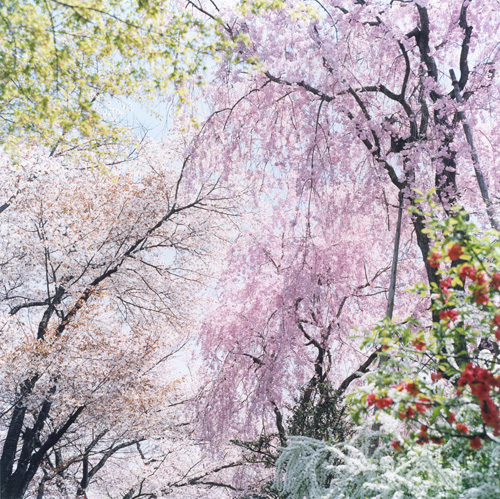
All of her work is colour and because it is film it has a very distinctive colour palette. There are always lots of feminine colours, pinks, purples, light blues and greens. The images she shoots seem to always be quite tight, she doesn't seem to like wide angle shots and prefers using a longer focal length to focus on small details. I will have to adapt this as best as I can with the equipment I have.


I already have a few ideas of where I can take this project. I want to challenge myself to have continuity between shots and not finish with 6 random macro shots as I feel this wouldn't reflect what Kawauchi is about. I will be shooting outdoors as I think this is where she receives most of her inspiration but with living in Manchester for uni there isn't much natural beauty so I'll try some shots in the city and then venture further a field when I return home for the christmas break.

Friday, 30 November 2012

Rinko Kawauchi


Rinko Kawauchi is a Japanese photographer born in Shiga, Japan in 1972 and is a very active photographer today.


She is currently working in Tokyo putting pictures together for her upcoming publication. Kawauchi has a very unique style which is half down to her choice of equipment and half down to her developed ideas and concepts.

She has experimented using 35mm, large format and panoramic cameras she prefers using a twin lens medium-format Rolleiflex camera. Kawauchi takes images of normal objects but she shoots them in a way that makes them look like there in a dreamland. The lighting is always bright and they are often very soft focus with the object of emphasis being sharp.


Her photos tends to be pastel coloured and she constantly uses the themes of family, human interaction alongside nature and the cycle of life. Her photographs always capture beautiful detail of the subject matter which makes the object look rather surreal and exquisite. Her photography has been compared to haiku poems as through her photos the subject is very clear and seems to provide a precise description of ordinary objects to reveal a hidden meaning. 


Illuminance

Illuminance was the first book that Rinko Kawauchi had published outside of Japan. As always the book was shot on a 6x6 camera giving every photo a square format much like the rest of her work. The title Illuminance is the scientific term used to measure light.

The photos featured in the book are a very unique style and easily identifiable as the work of Kawauchi as it combines contemporary photography with art in a way like no other.


Her work seems to be quite different from other photographers. Kawauchi focuses on small details in the world. The title of the book ‘Illuminance’ could mean she is illuminating parts of the world that we would otherwise ignore. She draws attention to the way light falls on an object to create beautiful pictures of objects or scenes that we would otherwise ignore. When you look at the photos there is a real sense of mystery about them as they are mostly up close to objects and you have to look at them for a few seconds to sometimes realise what has been photographed.


It is hard to see how the photos were created, some of them look like beams of light under a microscope and others are saturated scenes of calm forests. All with a common theme of light. Sometimes the light is reflecting off or through an objects and sometimes the ‘light’ in the photo is a flare from the sun.

Her photos show incredible detail and she has obviously mastered the skill of creating a scene from single objects using light as the main element.


However with the light comes the dark, Kawauchi has been known to focus on the circle of life and illuminance is no different. In several photos she uses circles and spirals which may literally represent the circles of life. There are several photos in the book that show how we as humans interact with the natural world around us. The photos seem to be in a sequence and each page opens a new idea.


These two photos are placed next to each other in the book and obviously share similar themes of nature. The lower photo could have many meaning for example how we as humans damage the landscape and forests for our own use but in contrast the top photograph shows how we live in harmony with other animals and creatures. Having said this someone else could look at the photos and see something totally different. This is what makes Kawauchis work so special.